BFUTURE CONGO

A large-scale regenerative agriculture project enhancing food security and sustainable growth

SEE ALL PROJECTS

BFUTURE CONGO

SUSTAINABLE IRRIGATION INFRASTRUCTURE

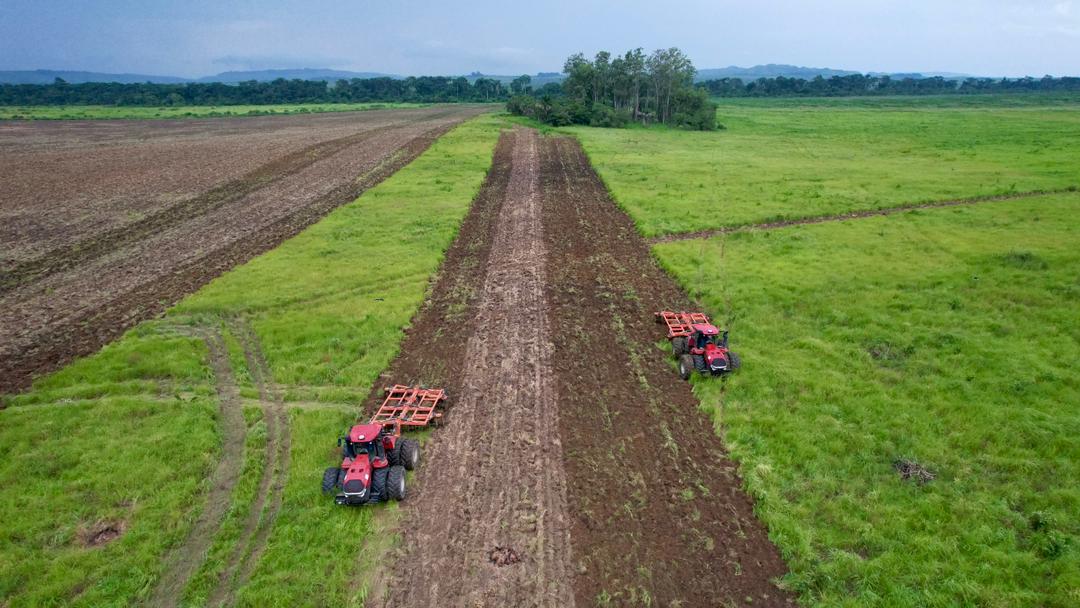
The project supports agricultural development in the southern and southwestern regions through training, knowledge transfer, job creation, and infrastructure development.

LOCAL EMPOWERMENT AND FOOD SECURITY

BF International has already formed regional partnerships for agricultural activities on about 10,000 hectares, cultivating soybeans, maize, sunflowers, and peanuts, and providing consultancy to institutional partners.

PROJECT
OVERVIEW

The project in Ghana includes the cultivation and production of maize, soy, wheat, rice, and tomatoes for the domestic market, as well as bananas for export.

It also involves major investments in the construction and implementation of an irrigation system that will draw water from the Volta River.

This system will include main distribution lines to transport and supply water across the entire arable area, ensuring year-round productivity and sustainable land use.

SOCIAL CONTEXT AND IMPACT

The initiative contributes directly to local food security and job creation, supporting the Ghanaian government’s agricultural development strategy.

Developed through a corporate partnership between BF International (Best Fields Best Food) and Musahamat Farms, the project currently covers 1,700 hectares already granted by the government, with an additional 5,900 hectares under concession transfer.

Once fully operational, it will provide training and employment opportunities for local farmers, promoting economic inclusion and environmental stewardship.

RECENT UPDATES

The project is progressing according to plan, with the irrigation system under construction and initial cultivation successfully underway.

The partnership continues to prioritize sustainable practices, local employment, and capacity building within the Volta region.

IF YOU HAVE ANY QUESTIONS,
YOU CAN CONTACT US.

SEE ALL PROJECTS

BFUTURE CONGO

SUSTAINABLE IRRIGATION INFRASTRUCTURE

The project supports agricultural development in the southern and southwestern regions through training, knowledge transfer, job creation, and infrastructure development.

LOCAL EMPOWERMENT AND FOOD SECURITY

BF International has already formed regional partnerships for agricultural activities on about 10,000 hectares, cultivating soybeans, maize, sunflowers, and peanuts, and providing consultancy to institutional partners.

SEE ALL PROJECTS

BFUTURE SENEGAL

SUSTAINABLE IRRIGATION INFRASTRUCTURE

The project involves cultivating 10,000 hectares in Louga to produce corn, wheat, rice, and potatoes, supported by an irrigation system with about 250 water-extraction pivots.

LOCAL EMPOWERMENT AND FOOD SECURITY

The educational program will benefit over 250 people and include housing, a school, and multifunctional facilities, with specialized courses in mechanics, agriculture, hydraulics, and related fields, as well as a seed production system to support local agriculture.

SEE ALL PROJECTS

BFUTURE ALGERIA

SUSTAINABLE IRRIGATION INFRASTRUCTURE

This initiative represents, today, the most significant Italian investment in a high-tech regenerative agriculture project in the Southern Mediterranean area: it involves a concession of 36,000 hectares in the Wilaya of Timimoun starting from 2024.

LOCAL EMPOWERMENT AND FOOD SECURITY

Specifically, the initiative will, once fully operational, involve the cultivation of cereals – durum and soft wheat (on approximately 70% of the surface) – and the remaining area dedicated to legumes such as lentils and beans.

SEE ALL PROJECTS

BFUTURE GHANA — REGENERATIVE AGRICULTURE IN THE VOLTA RIVER REGION

SUSTAINABLE IRRIGATION INFRASTRUCTURE

A large-scale irrigation system will extract water from the Volta River, ensuring efficient distribution and year-round agricultural productivity.

LOCAL EMPOWERMENT AND FOOD SECURITY

Through a joint venture with Musahamat Farms, the project strengthens Ghana’s agricultural independence, creating jobs and improving food self-sufficiency.